




- The altseason index reached 61 points, its highest level this year, indicating growing altcoin strength against Bitcoin.
- Fifty-nine percent of major altcoins are now outperforming Bitcoin, yet still fall short of a formal altseason declaration.
Data indicates a movement of investment from Bitcoin into alternative cryptocurrencies. The market shows signs that an altseason may be approaching, though it has not yet officially begun. The altseason index, which measures the performance of altcoins against Bitcoin, reached 61 points this weekend. This marks its highest level so far in 2025.
An altseason occurs when a majority of alternative cryptocurrencies outperform Bitcoin over a sustained period. This typically shifts investor attention toward projects with smaller market capitalizations. Currently, 59% of the top 50 cryptocurrencies—excluding stablecoins and tokenized Bitcoin versions—are outperforming BTC over a 90-day window.
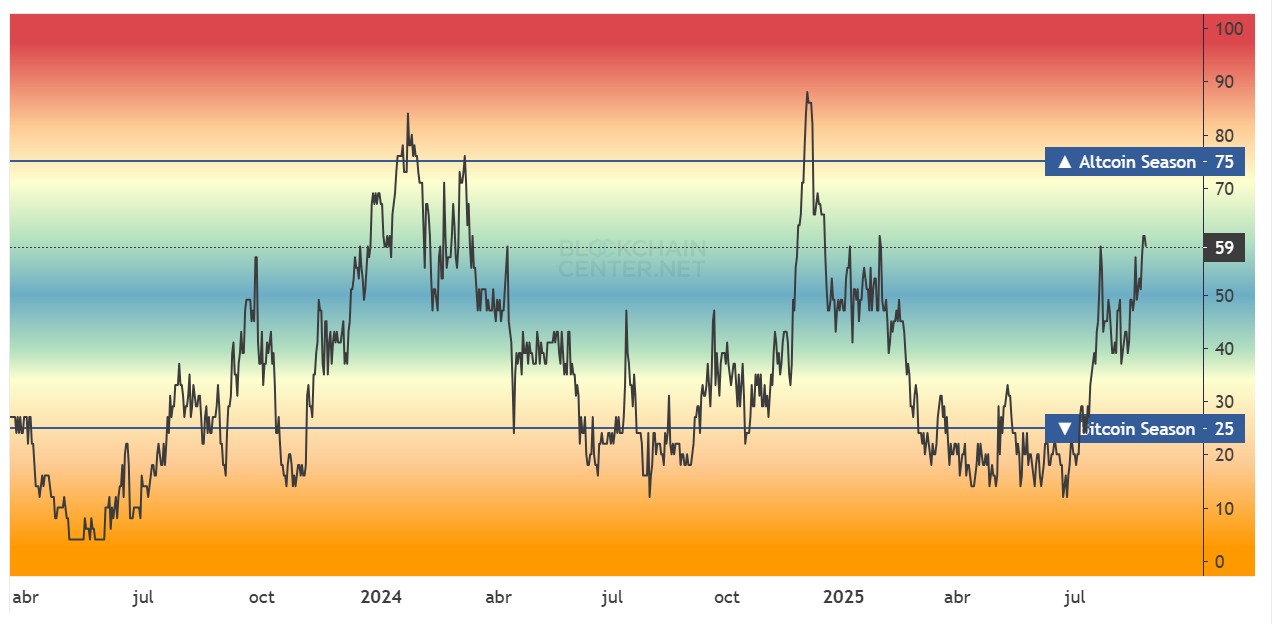
However, this figure remains below the 75% threshold required to formally declare an altseason, according to criteria used by Blockchain Center. Despite falling short of this benchmark, the consistent performance suggests growing demand for assets beyond Bitcoin.
Ethereum’s ether (ETH), for instance, has posted considerable weekly gains and reached new all-time highs, while Bitcoin’s upward momentum has slowed. This rotation of capital characterizes what analysts often refer to as phase 2 of the crypto market cycle.
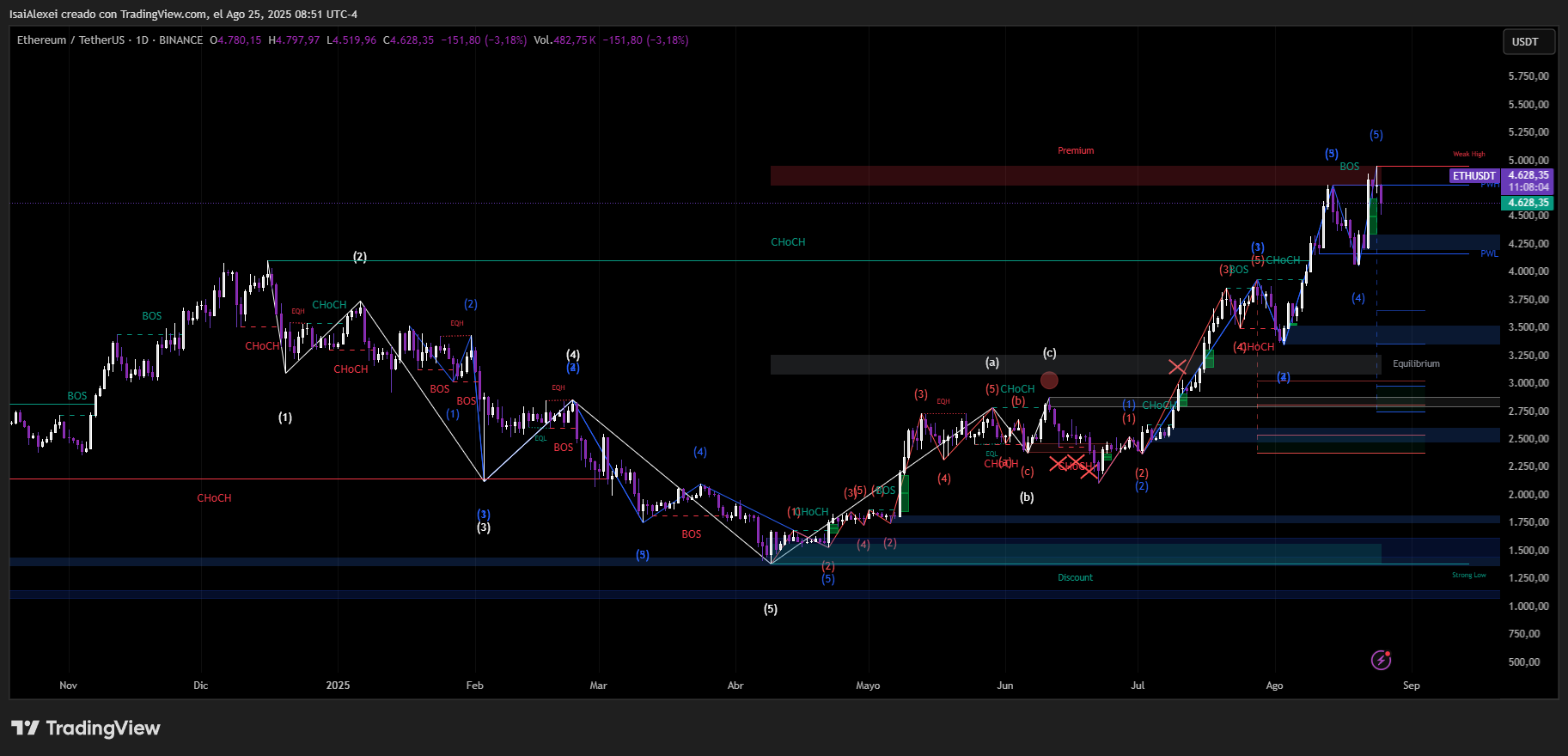
Ethereum (ETH) is trading at $4,592.70 USD, following a slight pullback of –4.79% after reaching a new all-time high of $4,954.81 over the weekend. Despite the recent dip, Ethereum remains in a bullish structure, up 22.17% this month and 65.83% year-over-year, with strong inflows from both spot and futures markets.
The Ethereum spot ETFs have attracted between $11–$12 billion in 2025, surpassing Bitcoin’s ETF inflows, which have ranged between $8–$10 billion.
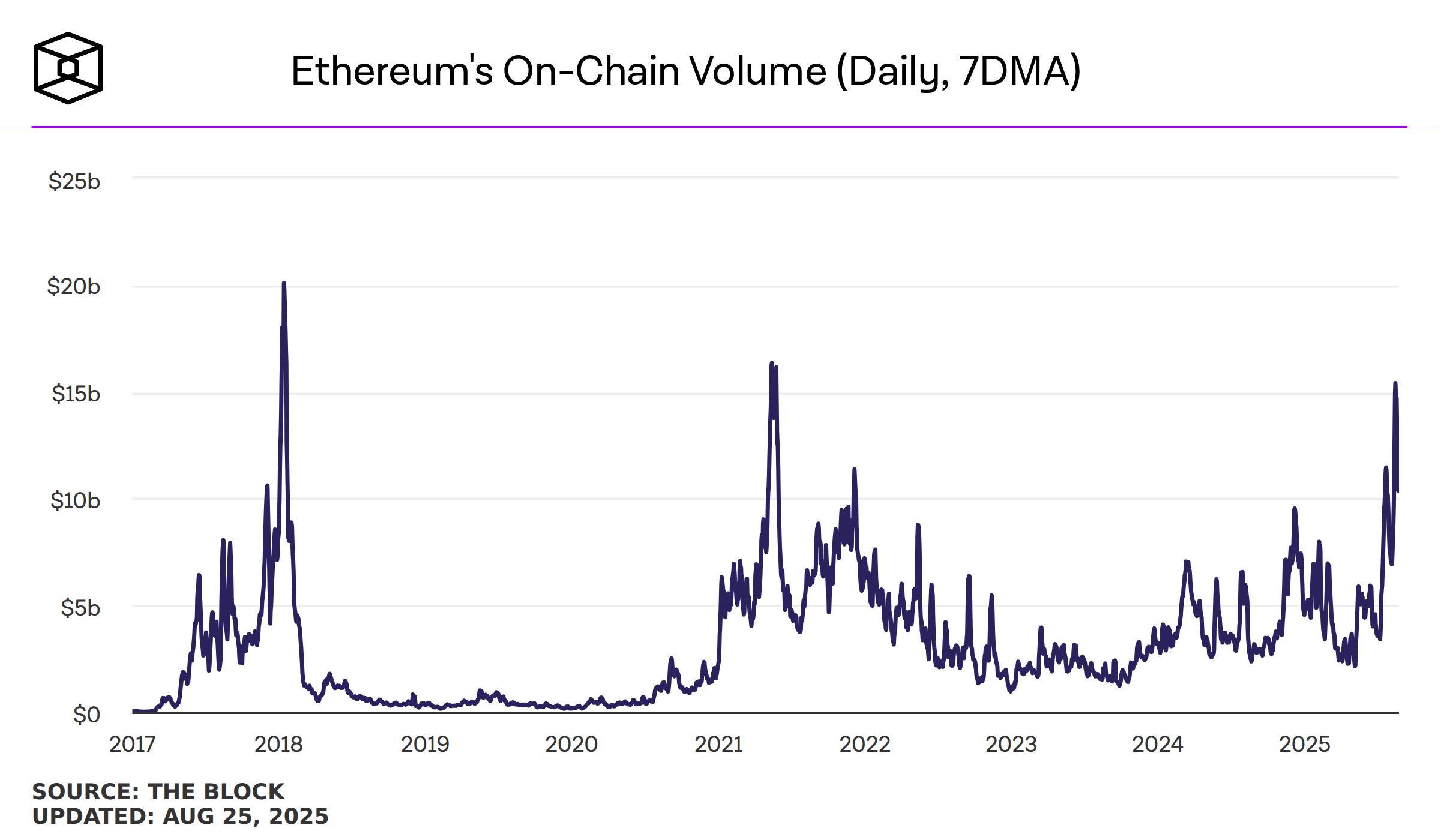
On the fundamentals side, Ethereum’s total assets under management have crossed $30.28 billion, with daily trading volume over $61.2 billion, indicating deep liquidity and institutional strength.




