
- Corporate treasuries accumulate SOL; Forward Industries raises funds, BIT Mining adds holdings, thirteen companies hold 8.9 million SOL.
- Alpenglow upgrade refines validator economics, speeds processing; critics note centralization risks and outages; smaller float magnifies incremental inflows.
Solana enters the last quarter with growing institutional attention and a clear price trend. The token rose 28% in the past month. Investors cite two practical traits: fast confirmation and fees near one cent. Those traits, they argue, support payments, trading, and consumer apps that require high throughput.
Bitwise CIO Matt Hougan says “Solana has all the ingredients for an epic year-end,” pointing to the same drivers that lifted bitcoin and ether this cycle: exchange-traded funds and corporate treasuries. Today, spot and treasury vehicles hold 2,635,953 BTC and roughly 11 million ETH. He suggests SOL could follow that path if U.S. regulators approve pending products.
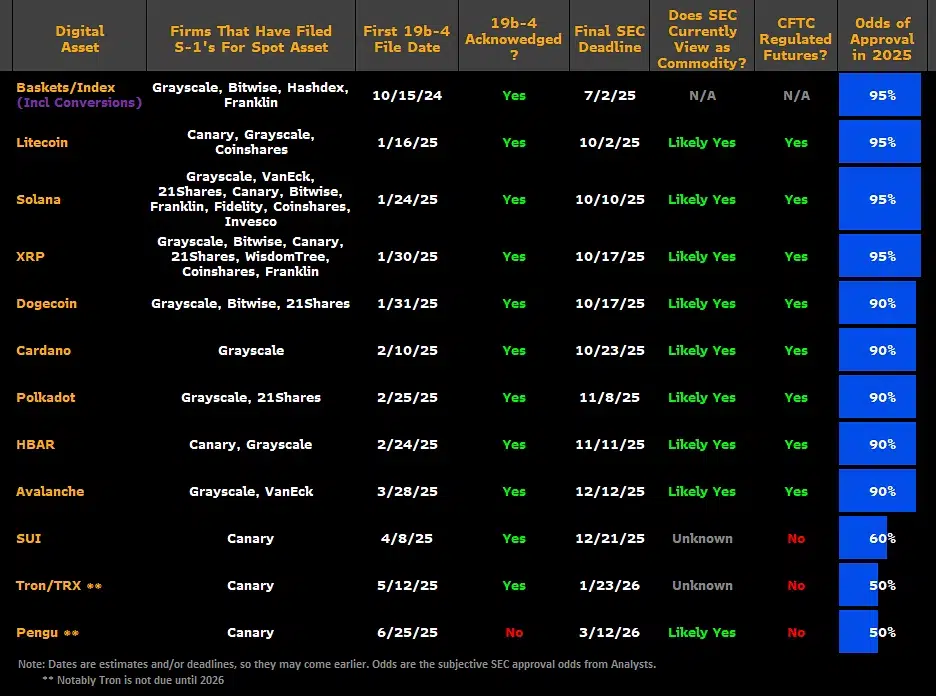
Applications from Bitwise, Grayscale, VanEck, Franklin Templeton, Fidelity, Invesco/Galaxy, and Canary Capital are on the docket. Market odds place approval near 95%, with an October 10 decision window. However, approval alone does not guarantee performance. Ethereum’s funds illustrate the point: price traction came months later, after on-chain activity and stablecoin demand increased.
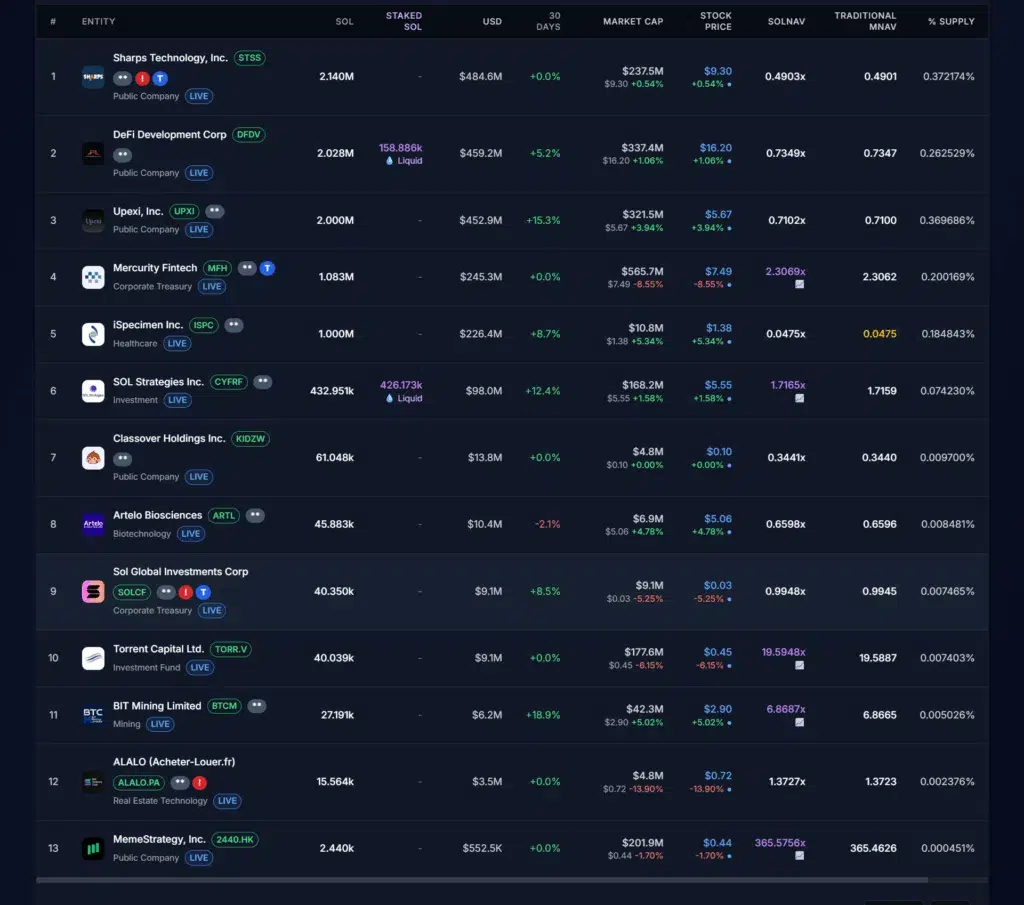
Corporate demand for SOL is now visible. Forward Industries raised $1.65 billion on September 8 in a private round led by Galaxy Digital, Jump Crypto, and Multicoin Capital to acquire SOL. BIT Mining added 17,221 SOL, lifting its treasury to 44,000 SOL. In total, 13 listed companies hold 8.9 million SOL, up 7% month over month. These buys reduce float and can steady order books when liquidity thins.
Meanwhile, the Alpenglow upgrade, approved by Solana’s validators, adjusts validator economics and speeds transaction processing. Galaxy Digital’s Lucas Tcheyan called it the network’s largest core change to date.
As a result, Solana ranks third in stablecoin liquidity behind Ethereum and Tron, and fourth in tokenized assets. Because SOL’s market size is smaller than bitcoin or ether, even moderate inflows can move price—like wind filling a smaller sail.
Risks remain. Critics flag centralization and outage history. ETF timing could slip. Yet if approvals arrive and treasuries keep buying, Solana has a clear setup: broader access, deeper liquidity, and sustained throughput that turns adoption from headline to ledger.
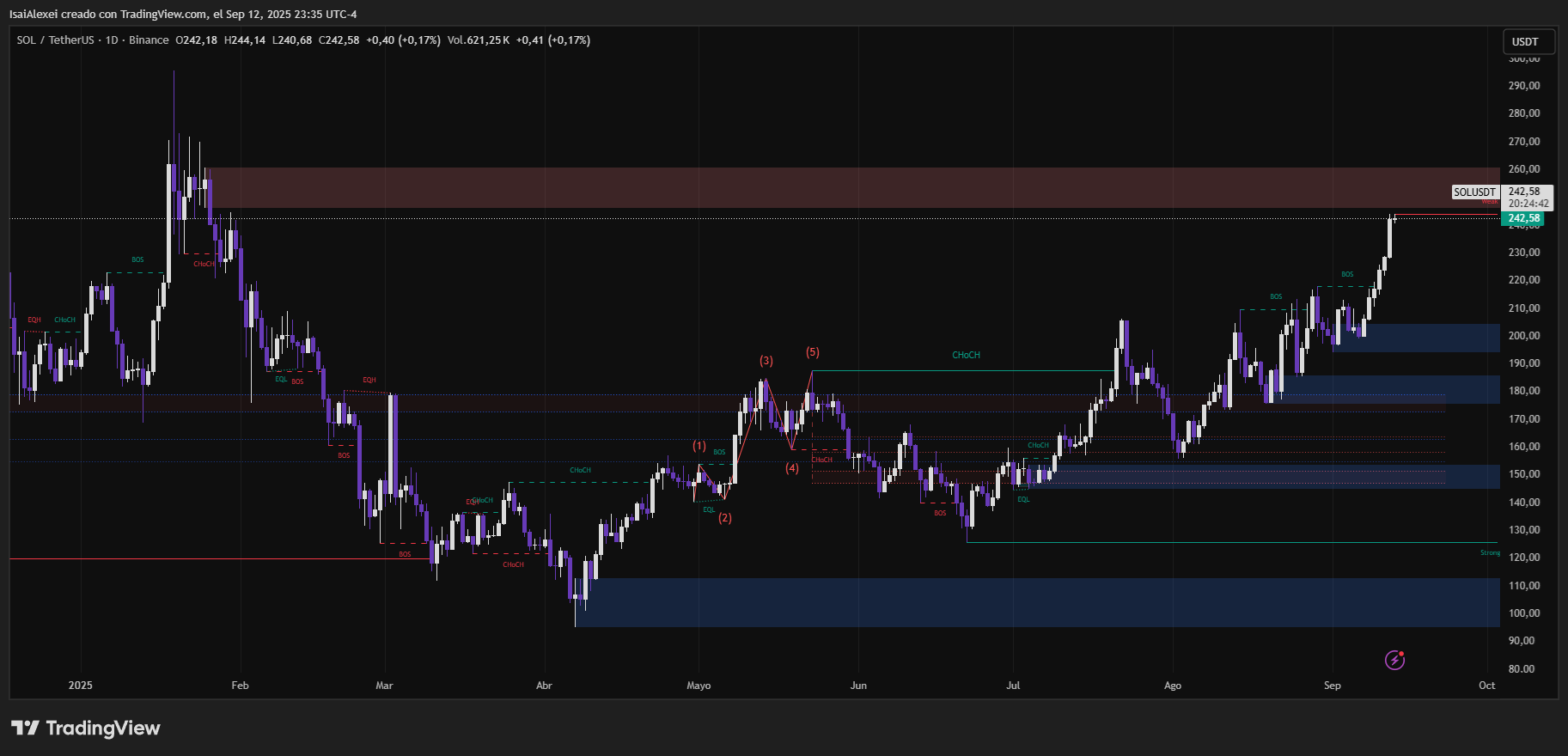
Solana (SOL) is trading at $242.55, showing a 3.83% increase over the last 24 hours and an 18.63% gain over the past 7 days. The market capitalization is approximately $131.5 billion, with a circulating supply of 540 million SOL.
Daily trading volume reached $12.17 billion, reflecting strong liquidity and growing investor interest. Price has fluctuated between $233.53 and $244.08, indicating moderate volatility amid a short-term upward trend.
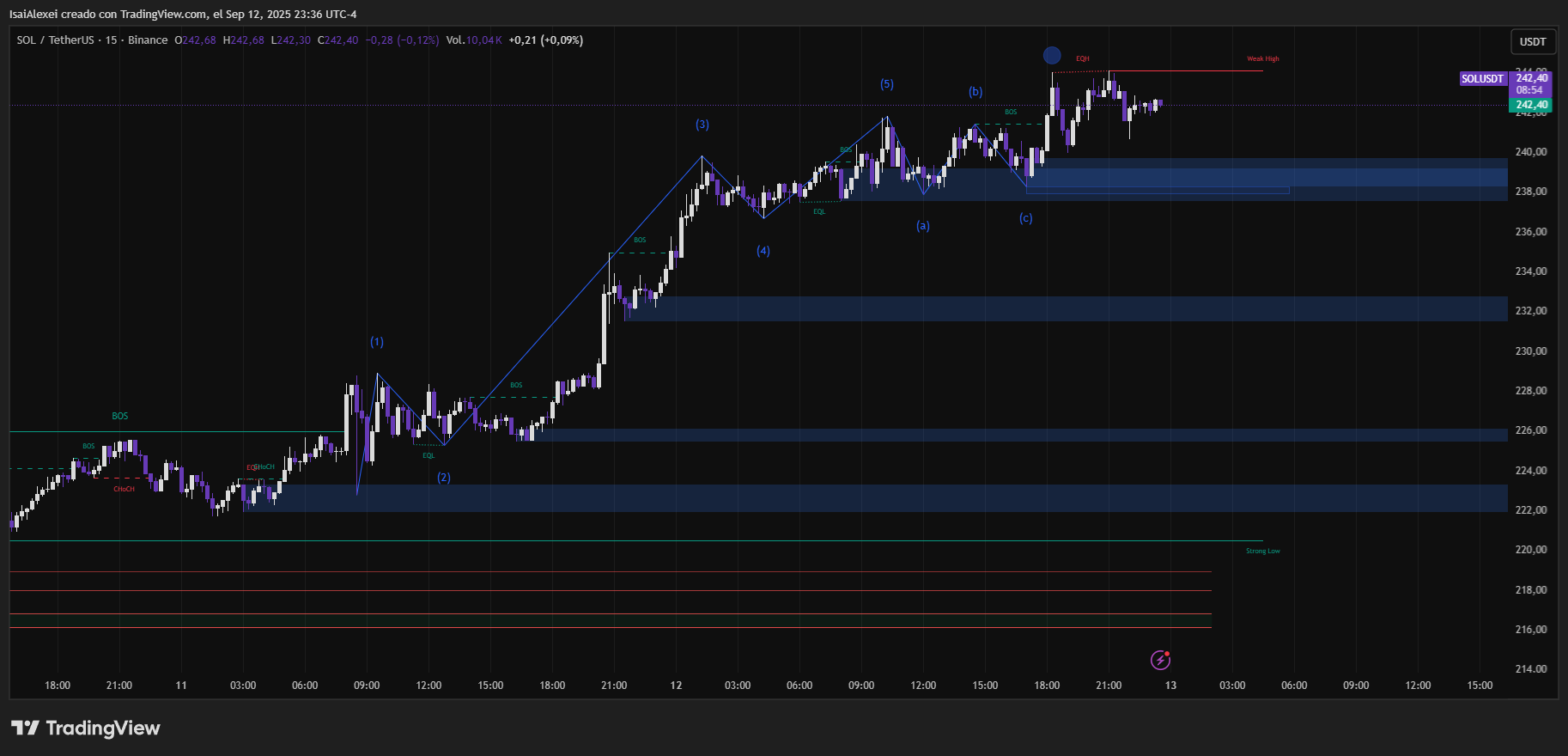
Technically, SOL has established support near $240, with immediate resistance forming around $246–$248. The token shows short-term bullish momentum, reinforced by rising institutional participation and ETF-related speculation.
Despite past network outages, Solana’s development team has implemented updates such as the QUIC data transfer protocol, stake-weighted quality-of-service improvements, and local fee markets to enhance resilience. These technical improvements, along with cross-chain interoperability and Ethereum Solidity compatibility via Solang, contribute to network stability and developer adoption.